Browse Resources
Educational Resources -- Investigations with Fast Plants
Resources | |
|---|---|
This 7-minute animated YouTube video provides a comprehensive overview and guide for teachers preparing to facilitate the Clover by 4-H Space Seeds investigation (that also has a free facilitation guide available from 4-H here: https://4-h.org/clover/activities/space-seeds/).
Title: Space Seeds...
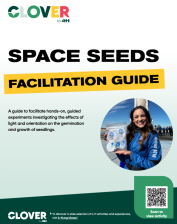 This free, 16-page downloadable PDF facilitation guide from 4-H offers hands-on experiments using Fast Plants to investigate how light and gravity influence seed germination and growth. Teachers will find structured activities, background information, and discussion prompts exploring phototropism,...
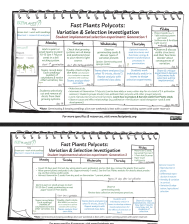 This PDF document shows in detail the possible day-to-day learning associated with the 6-week version of the Fast Plants Polycot Selection / Plant Breeding Investigation (aka Option A).
Conducting this selection / plant breeding investigation uses Generation 1 Polycot Fast Plants seed lines, with...
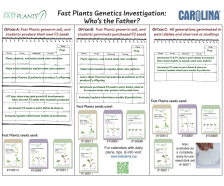 This PDF document shows three calendars side-by-side for comparing the time and materials needed for three different versions of the Fast Plants Mendelian Inheritance Investigation that is commonly called "Who's the Father?"
Option A involves students growing the F1 generation of Fast Plants in...
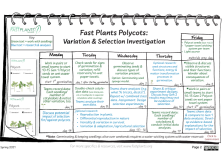 This PDF document shows in greater detail the possible day-to-day learning associated with the 3-week version of the Fast Plants Polycot Selection Investigation.
Conducting this selection investigation in just 3 weeks involves using Polycot Fast Plants seed lines for both Generation 1 and 2...
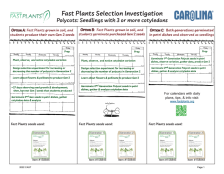 This PDF document shows three calendars side-by-side for comparing the time and materials needed for three different versions of the Fast Plants Polycot Selection Investigation.
Option A involves Fast Plants grown in soil, and students select for or against polycots, then produce their own...
 Preparing Your Students for the Future: Undergraduate Research Experiences with RapidCycling BrassicThis article with practical instructions about using Fast Plants in undergraduate research experiences was published as an addendum to a workshop given at the 2017 ABLE Conference in Madison, WI. Contains ideas for helping students at high school and undergraduate levels to conduct independent...
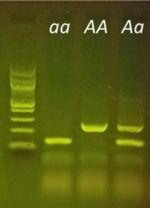 This blog post, written by the MiniPCR Team, describes the use of biotechnology kits and equipment (available from multiple suppliers) in the classroom to help students and learners understand the connection between observable phenotypic traits and underlying genotypes. These investigations can be...
 This 5-page handout aims to help students and their adult mentors explore topics and questions about the natural world and/or Fast Plants growth and development that could be investigated through research and experimentation. The handout is intended to inspire scientific question development that...
 This investigation begins with a phenomenon that is evidenced in most every produce aisle: Many of the vegetables that botanists classify as Brassica look and taste different. This investigation aligns with middle and high school Next Generation Science Standards as well as with agricultural science...
| |
| Next → | |