
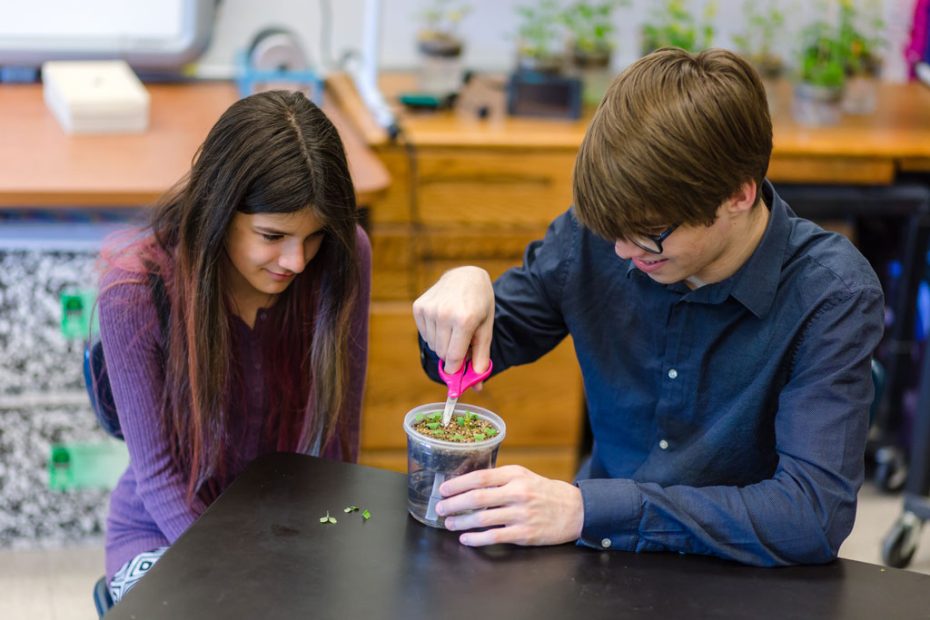
One of the keys to successfully teaching with Fast Plants is knowing how to thin and tend Fast Plants so they have enough space, light, water, and nutrients to thrive. Fast Plants grow very quickly, and if you do not provide adequate light, maintain consistent moisture levels and thin the young seedlilngs they can fail to thrive. This can result in weak, spindly, and slow to develop plants.
Thinning Fast Plants seedlings reduces competition for resources
Plants growing too close together suffer from competing for resources like water, root space, nutrients, and light. Roots can intertwine into a tight mat and still function pretty well, as long as there is plenty of water and access to nutrients.
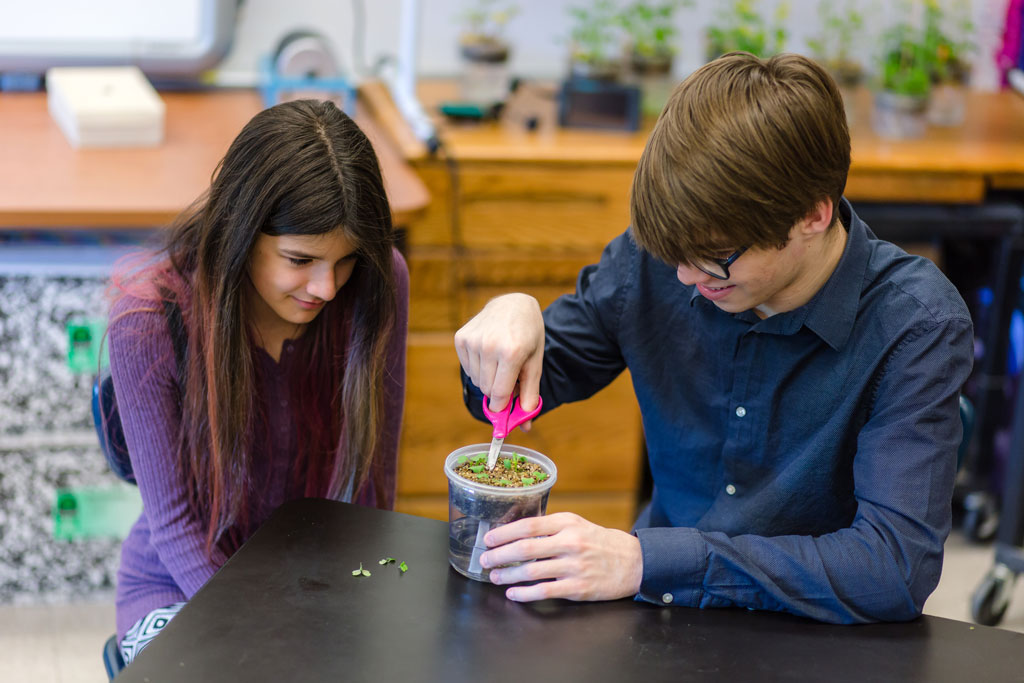
Once your seeds have sprouted, notice any seedlings growing very close together. Fast Plants thrive when they have room to grow. Thin seedlings about 2–7 days after planting, when you can easily reach them. If you have enough extra seedlings to thin simply by removing the extras, use scissors to cut off extra plants about soil level. In this way, the roots are not disturbed, so the remaining plants stay healthy and strong.
| Growing System | Recommended Number of Fast Plants | Notes |
|---|---|---|
| Quad System (4-cell) | 1 plant per cell (4 plants total) | Thin to one plant per quad cell shortly after germination. |
| 12–16 oz Bottle Growing System | 2 – 4 plants | Smaller bottles support fewer plants to reduce competition for light, water, and nutrients. |
| 24–33 oz Bottle Growing System | 6 – 8 plants | Larger bottles provide more root space and water capacity, supporting additional plants. |
| Deli Container Growing System | 4 – 10 plants | Common classroom setup that balances plant density with ease of care. |
If you have just enough seedlings, but some are too close together, it is possible to transplant 1-2-day old seedlings, but survival rates may be low, and growth may be stunted. To transplant Fast Plants, start with very young seedlings, and carefully grasp the cotyledons while sliding a toothpick or other thin probe alongside the seedling to help lift it out the pottiing mix. Then, where you want to move the seedling, make a hole with your probe just large enough to insert the seedling’s root with minimal disturbance. Once the seedling is moved, use your probe to gently push potting mix around the base of the seedling approximately at the same height as it was before transplanting.
Either snipping out extra plants or carefully transplanting to improve spacing accomplishes the same objective: giving each plant enough space to grow leaves, stems, and roots without crowding.
Fast Plants need ample energy from light
Fast Plants grown in soil and intended to flower require high-quality lighting that delivers sufficient energy. Understanding how to thin and tend Fast Plants includes understanding how energy from light is needed, too.
Before starting to grow Fast Plants be sure to check your lighting system using a PAR meter app. Fast Plants need a minimum of 200 µmol m⁻² s⁻¹ PAR reading at soil level when they emerge, and it is impossible to know the level of light emitted by visual inspection (learn about building a good light for growing Fast Plants in this post). Adequate PAR supports strong photosynthesis, timely flowering, and healthy development. Without enough light energy, plants typically have weak stems, delayed flowering, and may fail to produce flowers altogether.
| Fast Plants Life Cycle Stage | Importance of Light Energy at This Stage | Why a Strong Light Source Is (or Is Not) Key |
|---|---|---|
| Germination | Light is not the primary energy source | During germination, seeds rely on stored energy to sprout. Moisture and warmth are more important than light at this stage. Light becomes important once seedlings emerge and turn green. |
| Seedling Emergence | Light begins powering photosynthesis | As cotyledons emerge and begin photosynthesis, light provides the energy needed for early growth. Strong light helps seedlings stay short and sturdy instead of tall and weak. |
| Vegetative Growth | Light is essential for rapid growth | Fast Plants grow very quickly and need strong, continuous light to produce leaves, stems, and roots. Inadequate light can lead to spindly plants and reduced vigor. |
| Flowering | Light supports timely flower production | Adequate light helps plants flower on schedule. Weak light can delay flowering or reduce the number of flowers, which affects pollination activities. |
| Seed Development | Light fuels energy needed to fill seeds | After flowering, plants continue photosynthesis to produce energy for seed development. Strong light supports healthy seed formation and higher seed yield. |
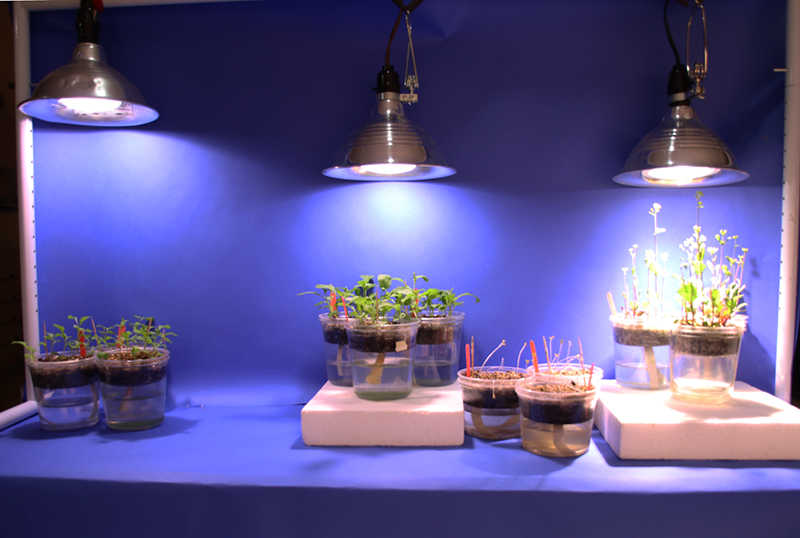
Tending Fast Plants also means checking water levels regularly, especially before weekends! Fast Plants like continuously moist conditions, which is why we always recommend growing in a wicking system (learn more about options for wicking growing systems from our YouTube “Planting Fast Plants” playlist). Fast Plants are extremely sensitive to drying out; so, make sure water reservoirs do not run dry. This steady care helps plants grow fast and strong, giving your students clear examples of plant growth, development, and life cycle.
Tending Fast Plants is good for students!
Good thinning and tending makes Fast Plants a reliable model organism for all your lessons. Young plants grow taller, stronger, and are more likely to bloom and set seed on schedule. In addition–whether you are teaching younger students or college labs–it’s healthy for students to have opportunities to nurture their Fast Plants and develop empathy for other living beings.
Using tending parameters for experimentation can also be a powerful learning experience, particularly with Fast Plants. Any environmental variable such as plant density or light availability will rapidly produce easily observable differences that are also easy to quickly replicate.
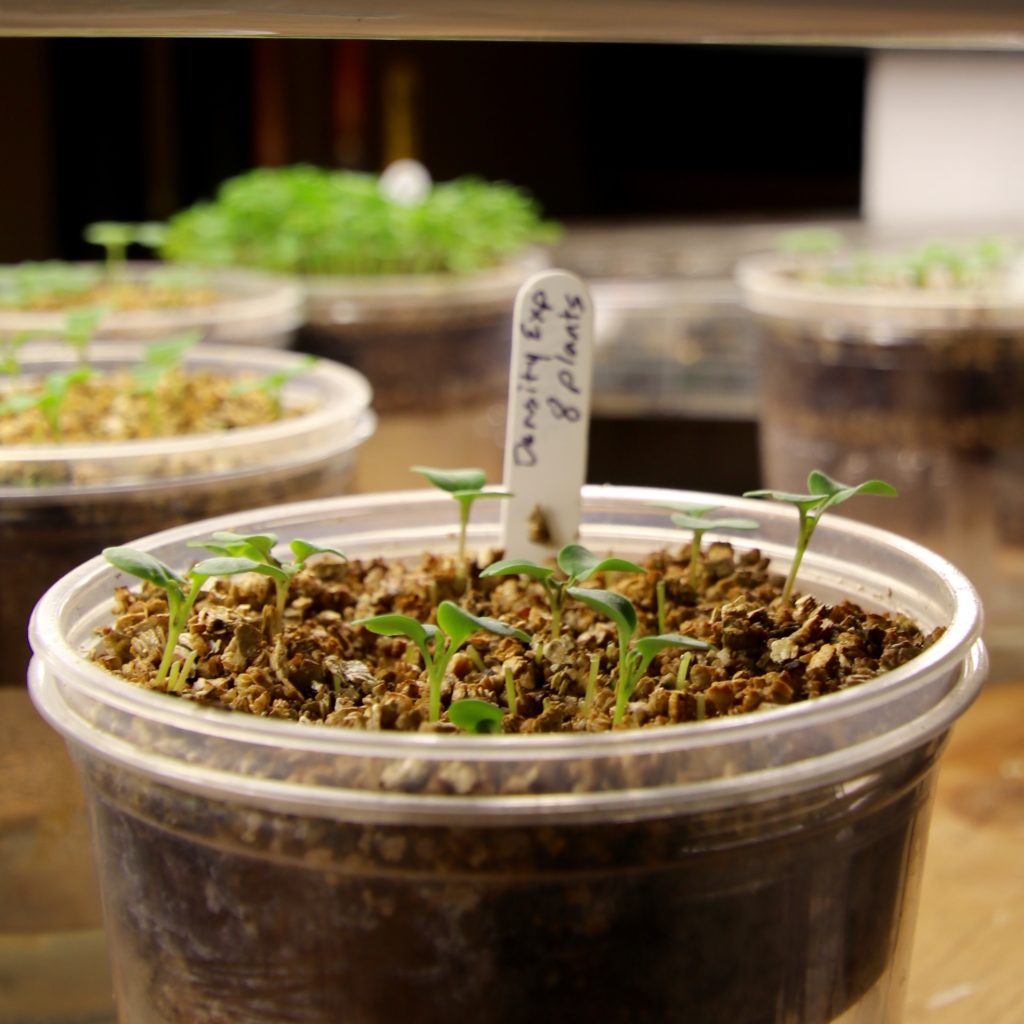
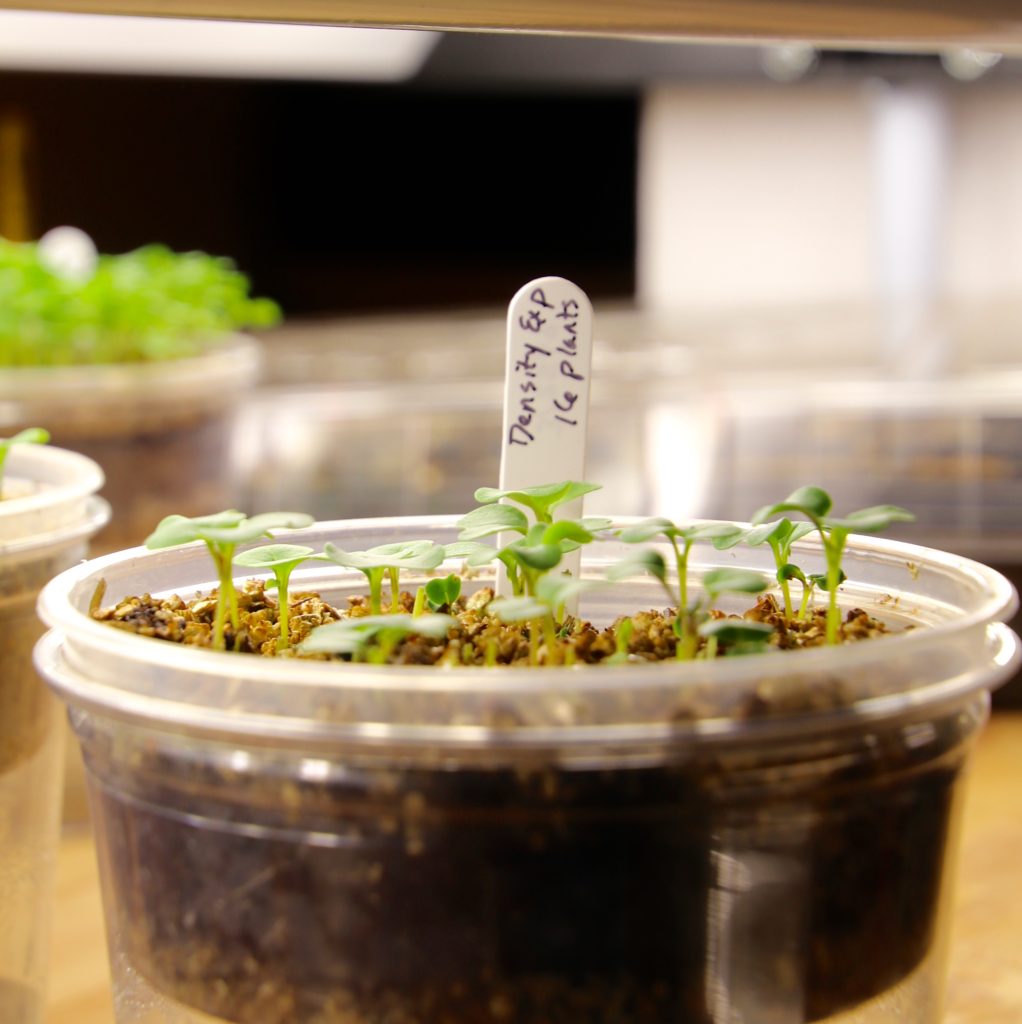
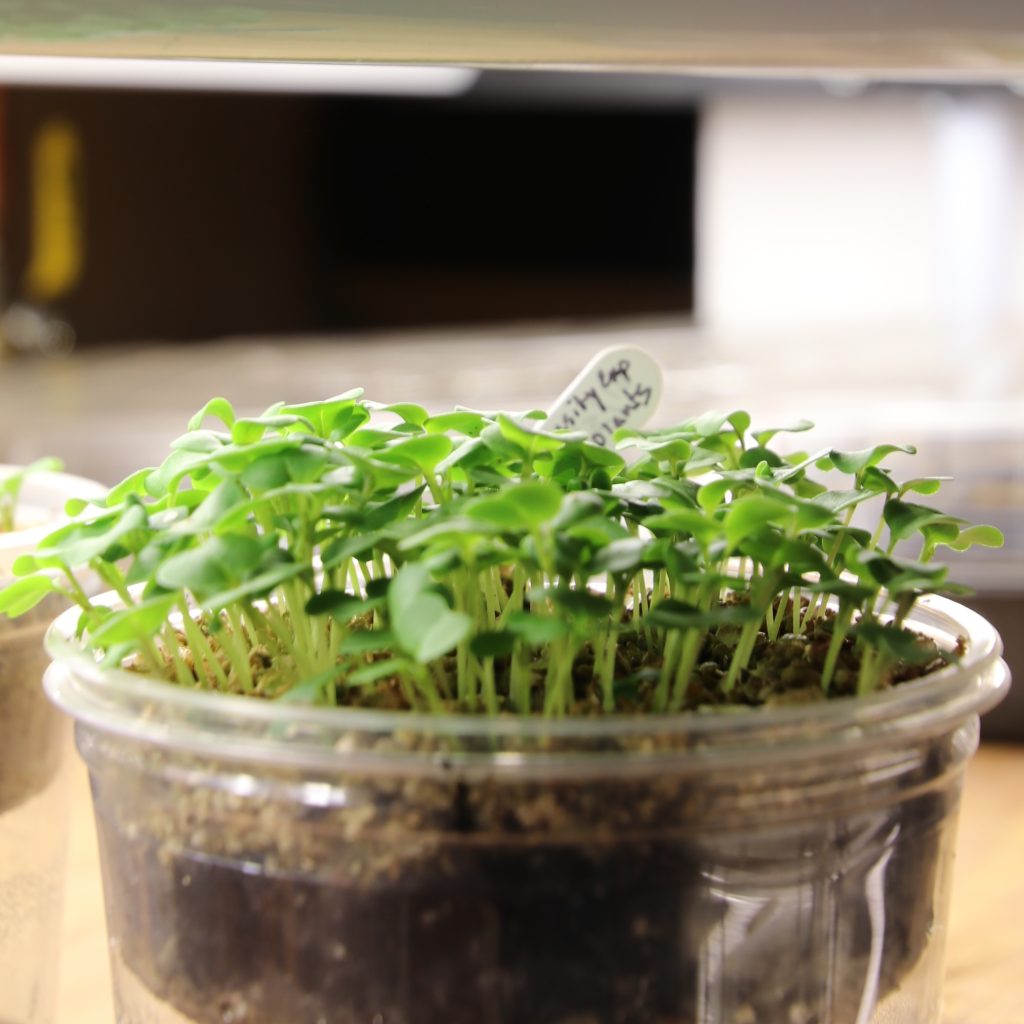
Experiment with growing different numbers of Fast Plants to see the impact of competition firsthand!
Learn more about how to thin and tend Fast Plants
For tips about tending Fast Plants throughout their life cycle, we also have a PDF in our digital library and a YouTube playlist with multiple videos about caring for Fast Plants.