
Timing Fast Plants Lessons Effectively: How Strategic Planting Dates Help Students Witness Every “Aha!” Moment
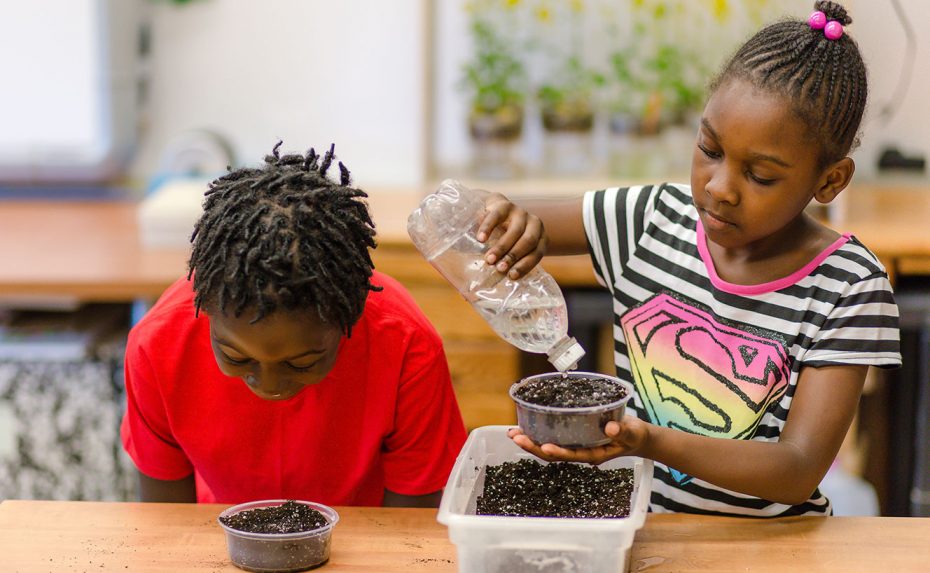
Timing Fast Plants lessons effectively is one of the simplest ways to elevate student learning with Wisconsin Fast Plants®. Because these plants move through their life cycle so quickly, when you plant matters! By choosing a planting start date that aligns with your instructional goals, you can ensure students are present for meaningful moments like germination, seedling development, cotyledon opening, emergence of the first true leaf, flowering, pollination, and seed development. With a little foresight, you can transform a Fast Plants investigation into a rich, observation-driven scientific experience for learners at any grade level.

Why Timing Fast Plants Lessons Effectively Enhances Learning
Working with living organisms requires intentional planning. When timing Fast Plants lessons effectively, you move beyond hoping students “catch” important changes and instead design conditions where those moments are more likely to happen during class time. Fast Plants are bred for a predictable growth pattern, and when paired with consistent classroom temperatures and continuous, high-quality lighting, their development becomes a more predictable instructional tool.
Strategic timing allows students to:
- Observe cause-and-effect relationships in real time
- Collect meaningful data across multiple life cycle stages
- Build stronger explanations and models based on firsthand evidence
Rather than fragmented observations, students experience a coherent biological story—one that supports three-dimensional science learning.
Choosing the Best Planting Day: A Key to Timing Fast Plants Lessons Effectively
One of the most common questions teachers ask is: What’s the best day of the week to plant Fast Plants? The answer directly influences when students will see the most exciting changes.
The Case for a Monday Planting
A Monday planting is often ideal when timing Fast Plants lessons effectively. Seeds planted at the start of the week typically germinate by Wednesday, with most seedlings visible by Friday. This cadence keeps observations squarely within instructional days and builds momentum as students notice daily changes.
Students return to class each day eager to compare growth, sketch seedlings, and ask new questions—exactly the habits of mind we want to foster in young scientists.

Important note on temperature: These timelines assume classroom temperatures remain above 65°F. Cooler environments, especially overnight, can slow germination and early growth, pushing key observations outside your planned window.
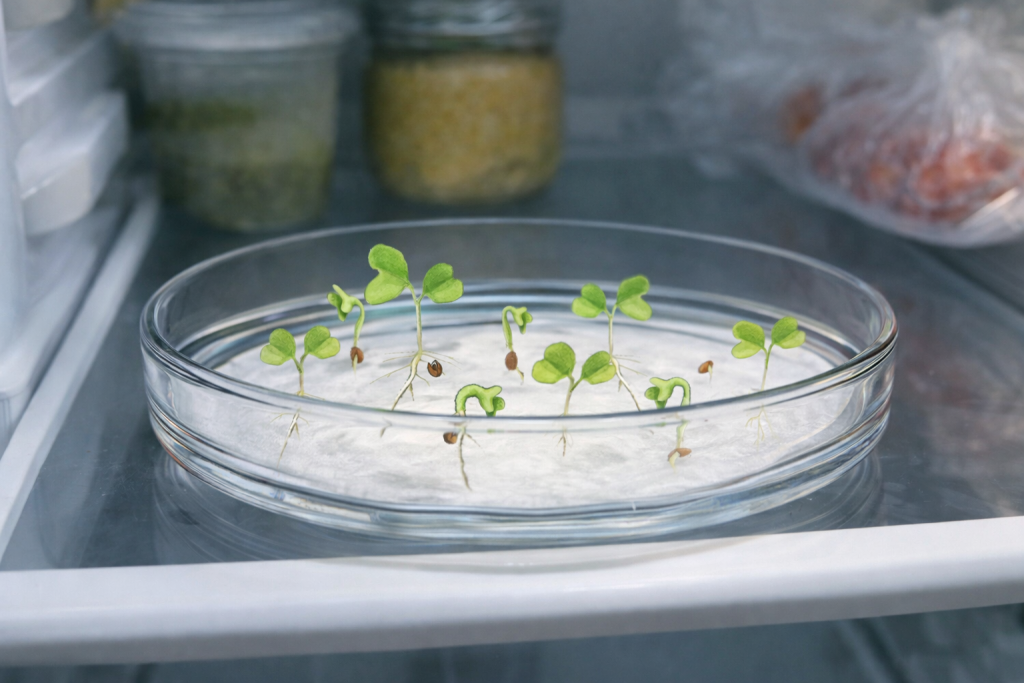
**Use this temperature response to your advantage if you ever need to slow your Fast Plants’ progress for any reason. For example, if you planned for students to observe seedlings on a Friday, but class was interrupted by a fire drill, put your Fast Plants in the refrigerator for the weekend! The cold will simply stall growth and development; so students can make observations on Monday that are very close to what they’d have seen on Friday, before refrigeration.
When a Friday Planting Makes Sense
If Mondays don’t fit your schedule, a Friday planting can still support timing Fast Plants lessons effectively. In this case, seedlings typically begin emerging over the weekend, greeting students with visible progress when they return on Monday. This approach works especially well when you want to reignite curiosity at the start of a new week.
Key Life Cycle Events Students Will Observe—and When
No matter which planting day you choose, thoughtful timing ensures students can observe the full Fast Plants journey or the specific stages tied to your learning goals. Typical milestones include:
- Germination (Days 2–4)
Students witness seeds sprouting and begin asking questions about structure and function. - Early Vegetative Growth (Days 4–7)
True leaves form, plants gain height, and individual variation becomes apparent. - Budding and Flowering (Days 10–14)
Flower buds appear and open, setting the stage for reproduction-focused lessons. - Pollination (Days 14–17)
Using bee sticks, students actively transfer pollen and see their actions influence outcomes. - Seed Pod Development (Days 17–21)
Fertilized flowers transform into pods as seeds begin to mature. - Life Cycle Completion (Days 21–35+)
Plants senesce and dry, leaving behind seeds ready for harvest and future investigations.
Throughout the process, students document observations, take measurements, and use evidence to construct explanations—core practices of authentic science learning.
Check out our clickable life cycle timeline to learn about the typical timing and key events that occur during all the stages of growth and development in Fast Plants here. We also have an annotated life cycle timelapse video to help predict what to expect as your plants grow.
Our grower’s schedule handout for Fast Plants selection experiments is one example of a planning strategy for anticipating the stages of development that students can observe. Keep in mind, if you want students to grow the whole life cycle and harvest seed (~45 days), timing Fast Plants lessons is particularly important for scheduling around vacation dates.

Turning Scheduling Into Strategy
Timing Fast Plants lessons effectively isn’t just about fitting an activity into your calendar. It’s about designing an experience where students consistently observe meaningful change, ask better questions, and connect concepts across time. By intentionally choosing your planting date, you’re setting the stage for deeper engagement, stronger scientific reasoning, and unforgettable classroom discoveries.